

Chimney repair · Zimmerman & Princeton, MN
Chimney repair in Zimmerman & Princeton, MN
One out of five houses in Princeton went up before 1940. Zimmerman is mostly 2000s. Two towns next to each other, two different chimneys.
Crowns, rebuilds above the roof, tuckpointing, stove and insert liners, sweeps and inspections.
We work weekdays, 9 to 5. Pick any time on the form and Kari will call you to set the exact one.
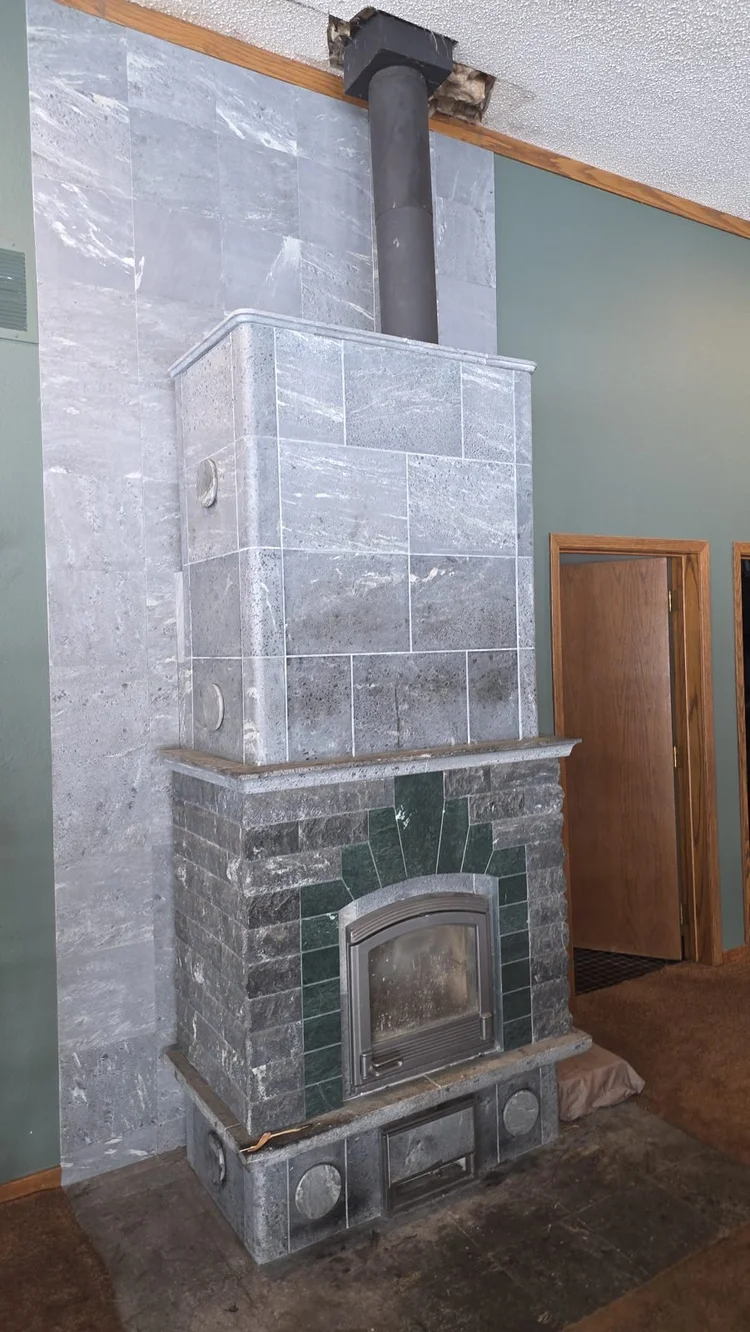
Open ground and hard winters
A lot of chimneys up this way stand with nothing around them to break the wind. Rain gets pushed into any open joint, and on a night below freezing it turns to ice and pries the joint a little wider. A stove or fireplace running on a cold day makes it worse, because the inside of the chimney is warm while the outside is frozen. That's why crowns crack early, and why the top three or four feet often need rebuilding while the rest is still sound.
What we do about it
We rebuild the top on solid brick, repoint what's worth saving with mortar that matches the brick, and pour a crown with a real overhang and drip edge so water runs off instead of back in. On the old Princeton brick we use a softer mortar, because modern mortar is harder than that old brick and will break it.
Princeton: the old brick
Princeton has the biggest share of pre-1940 houses of any town on our north metro pages. About 473 homes, one in five, went up before 1940, and 70% went up before 1990. Chimneys that old were built with lime mortar and softer brick, and some from that era have no clay liner in the flue. If a wood stove or insert is going into one, the liner question comes first.
Zimmerman: the young chimneys
Zimmerman is the other end of it. Its median house was built in 2003, and almost half its homes went up in the 2000s alone. Those chimneys are around twenty years old now. That's young for brick, but it's about when a flush crown, a caulked flashing joint or a cap that was never fastened down starts to show it.
Zimmerman & Princeton, by the numbers
An old town and a new one.
Both towns' 4,577 homes together, by the decade they went up. The two ends of the chart tell it: a tall 2000s bar from Zimmerman and an old one before 1940 from Princeton.
Source: U.S. Census Bureau, American Community Survey 2020-2024 5-year estimates, table B25034 (year structure built).
Freeze and thaw, measured nearby
Zimmerman's nearest long-record NOAA station is in Elk River, about nine miles south: 88 freeze-thaw days a winter, averaged over eight winters. Princeton's is the one east of Santiago, about eight miles off: 90 a winter over ten. Either way it's close to three months of days where water in a chimney freezes at night and thaws the next afternoon.
Old brick takes it differently
On a newer chimney, freeze-thaw damage shows up at the crown and the top joints first. Pre-1940 brick is soft enough to take water in itself, so it can flake on the face even where the joints look fine. That's why old Princeton brick gets a softer mortar, and why patching it with hard modern mortar backfires.
Frost from early October to May
At the Santiago station the first freeze usually comes around October 7 and the last one around May 3, with about 29 nights a winter at zero or colder. If a chimney is going to take on water, it has most of the year to freeze.
Chimney inspection in Zimmerman and Princeton
On an old Princeton chimney we check whether there's a liner at all, what shape the clay tiles are in if there is one, the mortar and brick above the roof, and the crown. On a Zimmerman house from the 2000s it's the crown or the chase top, the flashing, the cap and the flue. The camera goes up every flue, and the pictures come to you.
The flue matters as much as the brick
When we went back through the 418 repair scopes we've written, 223 of them involved the flue: cracked tiles, gaps, or a new liner. That's more than half, and it's the part you can't see from the ground or the attic. On the brick chimneys alone, 111 of 234 scopes involved the flue.
Twenty-year-old chimneys need a look too
A Zimmerman chimney from the 2000s isn't old, but the cap and the flashing on it are at the age where they start to go. In our repair scopes the cap came up in 68 of 418 and flashing in 103. Neither one is a big job when it's caught at the start. Both turn into bigger ones once water has been getting in for a few winters.
Our own work
Tall chimneys, done right.
Photos from our own jobs, on the same kind of tall, exposed chimney.
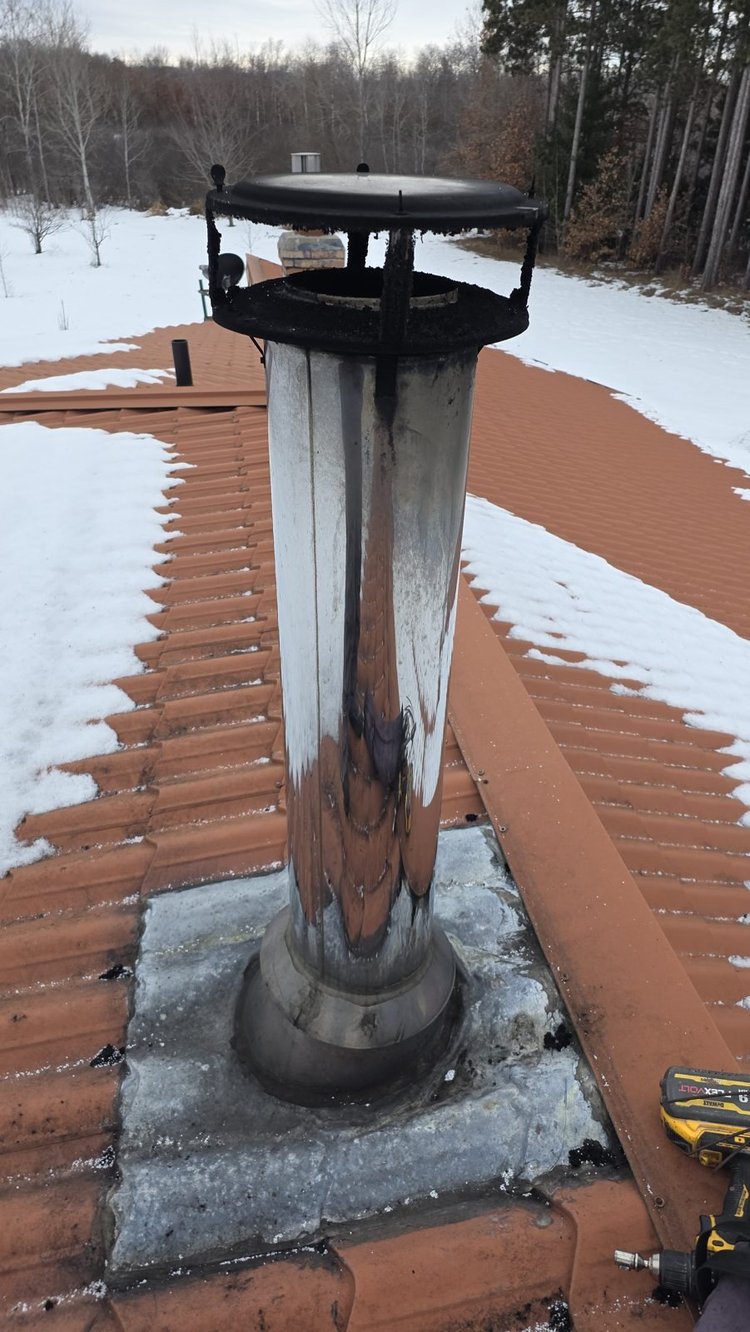
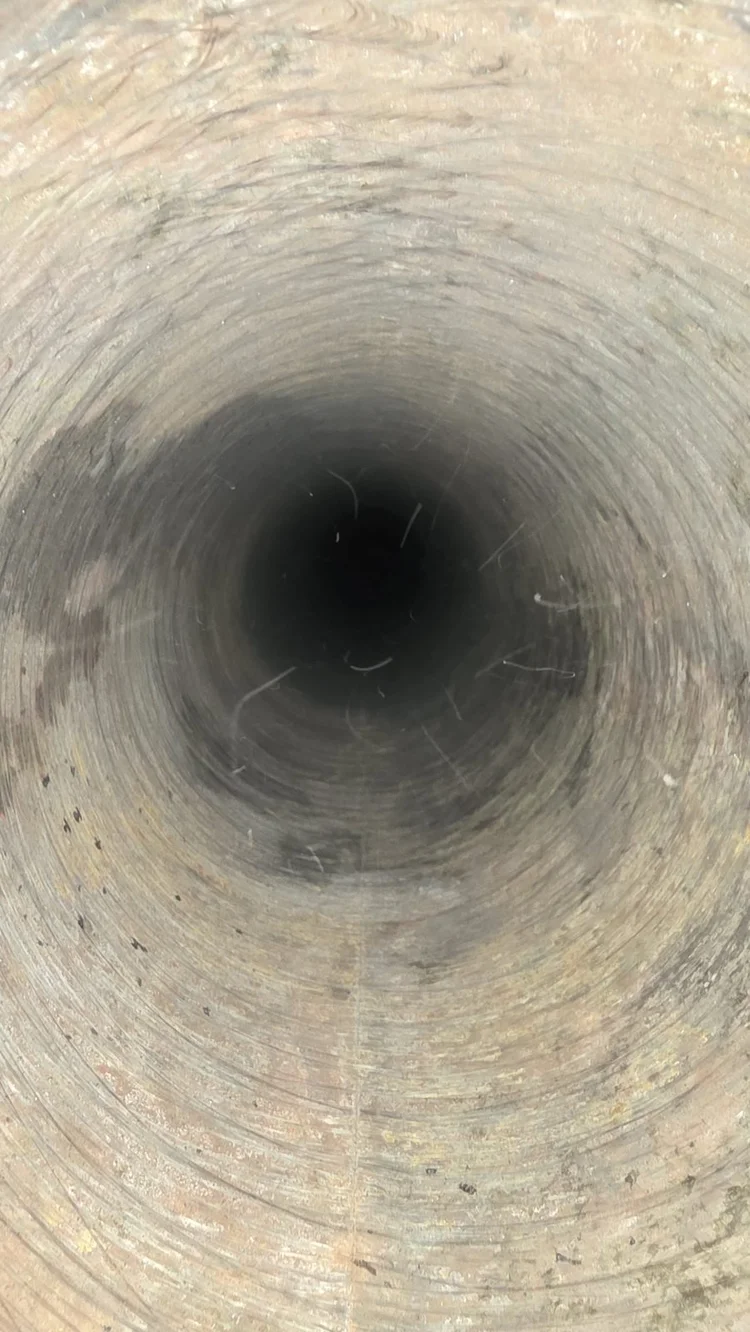


Swipe for more
Chimney sweep in Zimmerman and Princeton
Every sweep we do starts as an inspection. The camera goes up first, and if there's more than an eighth of an inch of buildup in a flue, we sweep it that same visit. We won't sweep one we haven't looked at.
Stoves and old flues
If you're adding a wood stove or an insert to an older Princeton chimney, the inspection tells you whether the flue can take it or needs a liner first. A stove liner is permitted work, and we handle that side of it too.
Talk to Kari
Princeton or Zimmerman, Kari's your first call.
She'll ask how old the house is, how many flues you have and what you're seeing, then give you the price for your chimney and find you a day.
We work weekdays, 9 to 5. Pick any time on the form and Kari will call you to set the exact one.
Google reviews
What people wrote after we left.
“Jason and Jonah came by to inspect our fireplace following a chimney fire that happened last year. They were absolutely fabulous! They did a great job, explaining everything along the way and went above and beyond....”
“Great company. Excellent customer service! Looking forward to being a long time customer!”
“Very professional straight forward with what needs to be done”
Swipe for more
Zimmerman and Princeton questions
Does a stove or insert liner need a permit?
Yes. Zimmerman, Princeton and Milaca each permit it locally, and we deal with whichever one your address falls under, from the application to the sign-off. Crowns and repointing usually don't need anything filed.
The chimney hasn't been used in years and we want to put in a wood stove. Where do we start?
With an inspection. We find out whether the flue is sound, whether it's the right size for the stove, and whether it needs a liner first. Then you'll know what the stove install involves before you buy anything.
Our house is from the 1930s. Does the chimney even have a liner?
Maybe not. Some chimneys that old were built with no clay tiles inside at all, and others have tiles that have cracked or shifted. The camera shows us which, and you'll see it in the pictures.
The inspection found a cracked flue tile. Can we still use that fireplace?
Not that flue, until it's fixed. A cracked tile lets heat and smoke reach the brick and the framing around it. Depending on how bad it is, the fix is replacing the damaged tiles at the top or a new stainless liner the whole way down.
We have some old bricks that match the house. Can you use them?
We'll look at them. If they're hard and sound, reusing brick that matches the house usually makes the best-looking repair.
Is a chimney structural?
A brick chimney carries its own weight down to its own footing. It isn't holding up the house, but it passes through the roof and the framing, so when it leans or comes apart, those are what it takes with it.
Do I need to be home for the inspection?
Someone needs to let us in. The inspection covers the fireplace or stove and every flue from inside the house, not just the roof.
Nearby, too
Same crew, same inspection, up Highway 169 and Highway 10.
Got a chimney in Zimmerman or Princeton?
Old brick or a twenty-year-old crown, we'll get up there, take pictures, and tell you straight what it needs.
We work weekdays, 9 to 5. Pick any time on the form and Kari will call you to set the exact one.
Got pictures of your chimney? Email them to info@elementhearthandhome.com with your name and number, and Kari will take it from there.