

Questions about your chimney? Call our receptionist, Kari, at 320.414.0191. She picks up weekdays, 9 to 5.
A wood stove gets used differently from a fireplace. It burns for days at a time through the winter, and a lot of people turn the air down at night to hold the fire till morning, which is the easiest way there is to build up creosote in a flue.
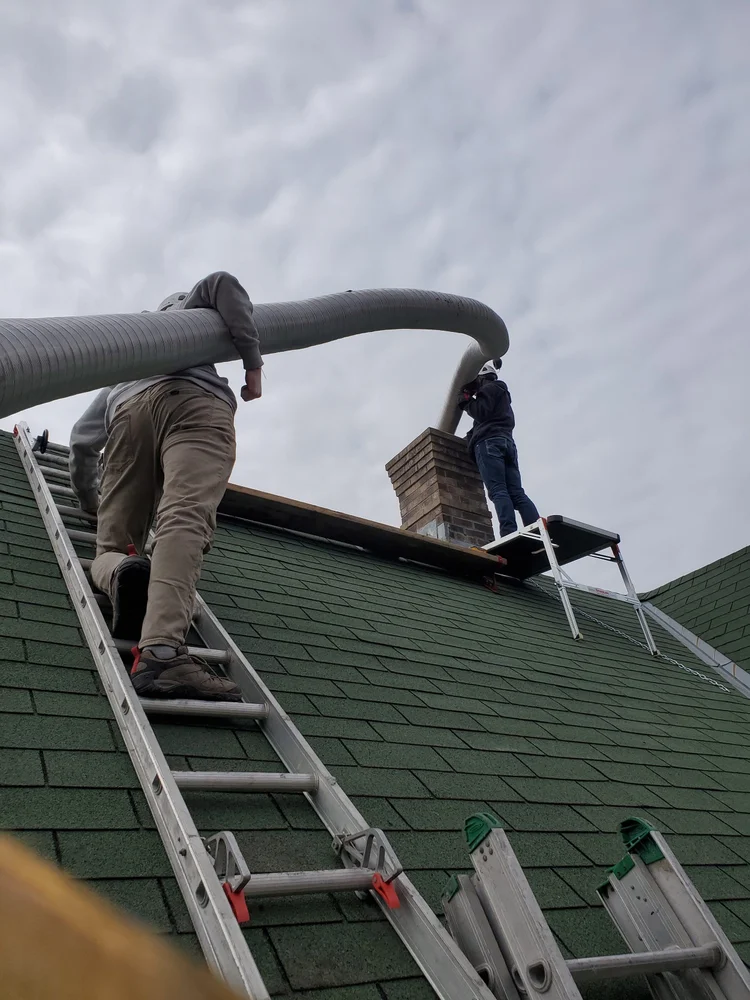
What we check
We look at the stove pipe from the stove to the chimney, the connection where it goes in, and the flue itself, for buildup and for cracks in the liner. A stove that's been put into an old fireplace flue without a liner sized for it is one we pay close attention to, because the flue is often too big for the stove, the gases cool off on the way up, and the buildup comes fast.
What usually fixes it
Burning dry wood and giving the fire enough air helps more than anything. When the flue is cracked or sized wrong, the fix is an insulated stainless steel liner run from the stove to the top of the chimney, which keeps the gases hot enough to get out the top and keeps the heat inside the liner.
If any of this sounds like your chimney, call 320.414.0191. We'll come out, climb up, take pictures of what we find and show you before we quote anything.
Related: Chimney flue relining · What our chimney inspection covers